
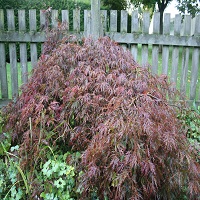
Type of Hedge
Acer’s are often deciduous trees or large shrubs, meaning that they lose their leaves seasonally. They are often paired with palmately-lobed leaves with relatively small flowers, this is followed by the production of characteristic winged fruit.
Growing Conditions
The most effective growing conditions for Acer’s are in moist but well-drained soil, they grow best in partial shade but will tolerate excessive exposure to the sun if necessary.
Effort to Grow
Acer’s require minimum effort to grow and are relatively low maintenance. Propagate Acer’s through grafting or softwood cuttings. Be careful when choosing an Acer as many are not frost hardy and are better grown in large pots so you can protect them from extreme temperatures. The effort to grow an Acer depends on the variety selected, some can be quite temperamental.
Why plant this hedge in your garden?
Many Acer’s have a fine autumn colour, and some have ornamental stems.
What to look out for when planting and in the first 2 years
Leaf scorch within the first couple of years can sometimes be caused by lack of soil moisture or excessive exposure to the sun, so bear this in mind if your Acer Palmatum is exposed to excessive sunlight.
What to look out for when the hedge is established (2 years or more after planting or if you inherit it)
Pests for this hedge include aphids and horse chestnut scale – which may be a problem. Diseases also include verticillium wilt.


