
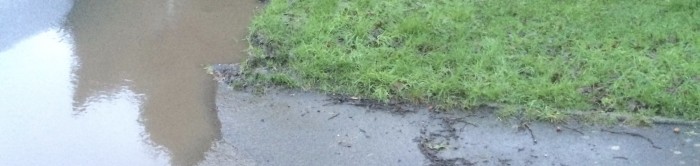
The recent weather events have battered our houses and gardens. With so many gardens flooded or swamped it is difficult to work out what to do for the best.
If like us your garden is on Warwickshire clay, it will take a long time to drain and get back to ‘normal’.
How to identify your soil type.
In ‘normal’ drier weather conditions the easy way to identify your soil type is to dig down a spades depth and see what comes up. When you take a lump of this soil and try to make a ball what happens?
- Sandy soil – the ball crumbles
- Clay soil – the ball is solid heavy and sticky.
However, in these conditions all soil is solid heavy and sticky. The rule of thumb we apply is the longer it takes to drain the more likely you are to be on clay.
Clay has good points.
- It is nutrient rich making it easy to grow plants.
- It retains moisture which is great in the summer
- It can be easily improved by the addition of compost and organic matter
Improve your garden drainage
There are various ways to improve garden drainage, and Chopwell are here to help. The two most popular are:
- Land drains are pipes with pin holes to encourage drainage from parts of a garden that are boggy. Land drains help the natural drainage work more effectively
- A soak-away is a pit filled with stones that will capture the water and help it drain from other parts of a garden
Both land drains and soak-aways do require effort to install as they are buried. Once in place they do not impact the look of your garden, and have a positive effect whatever the weather; stopping plants being swamped or left for long periods in sitting in water or bogs and at the risk of rotting.
Contact Chopwell today for your free survey of drainage options. We can help you manage the boggy areas of your garden.


